How to Feel Like You're on Vacation by 7:42am.
No trip required. The 4-step audit that brings the vacation version of your family into an ordinary week, built to survive a sick day, not just your best Tuesday.
You don't need a vacation. You need the two or three conditions that were actually doing the work on vacation, and a way to see which ones can live inside a Tuesday.
Why your family is better at the resort (and what to do about it)
If your life looks good on paper and still feels like a fight every morning, you've probably tried the standard fixes. More family time. A better routine. A reset challenge you abandoned by Thursday. They fail for the same reason, every time.
The problem was never the number of hours. It's how many decisions you make before noon, how often you're checking the clock, and how much of your day is repetition you never actually chose. Your family functions better on vacation because of the conditions, not the beach.
Most "bring the vacation feeling home" advice tries to export all of it. Slow mornings, no schedule, zero cleanup, dropped into a life with school pickup and jobs. That collapses by Wednesday, and then you decide the whole idea was a fantasy.
What actually has to happen is smaller and more honest. You find the two or three conditions that were quietly doing the work, change the ones that can fit a weekday, and stop calling autopilot a decision. That's it. That's the whole job.
And if you've already tried and it didn't stick, you're not behind. Most routines die by week two because they were built for the best possible week and measured against a sick day. Both things are true: you can love your life completely, and want it to feel less like Groundhog Day.
The 7:42 problem
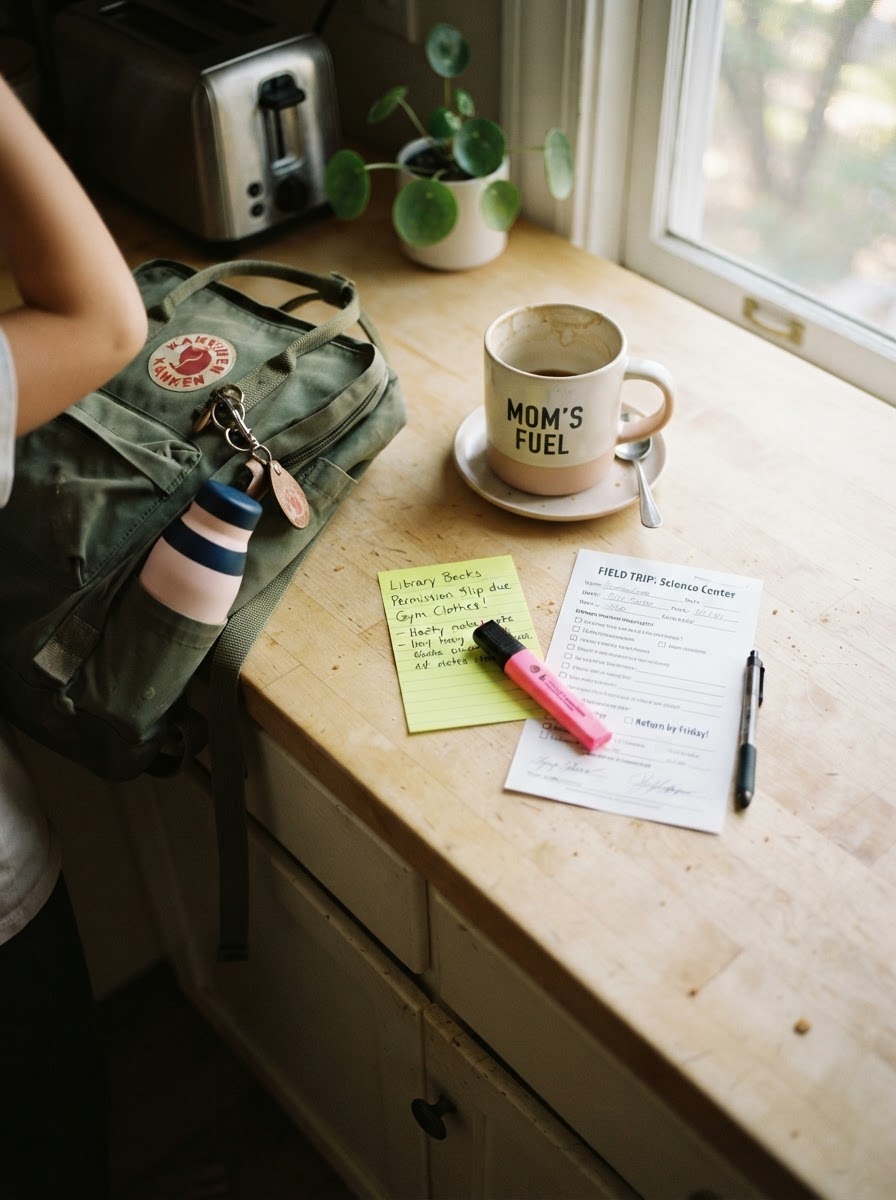
It was 7:42. Backpacks packed, water bottles filled, someone already crying.
Eighteen years as an occupational therapist. A husband I love, three kids, two dogs, the house, a travel business on the side. Perfect life on paper.
And I was drowning. Every morning was a fight. Every pickup, three little nervous systems melting down while I figured out dinner. My husband works long days. So the morning marathon and the evening meltdowns were mine.
Then came the thought I couldn't unthink: I don't actually want more time with my kids if this is what the time looks like.
Here's the weird part. We'd come home from a family trip and the vacation version of us lasted about 48 hours before the grind snapped back. But I started paying attention on those trips. My kids weren't easier because we were at a resort.
It was the conditions. And some of those conditions didn't need a beach. They needed me to notice them.
The Vacation Feelings Audit
Every audit starts with noticing, and noticing needs a comparison. Your last vacation is the data. Your normal school day is the control. Fifteen minutes, tonight, with a pen.
Compare the two on six things:
- 01Decisions made before noon.
Vacations hand you a short menu. Weekdays hand you three kids' worth of choices by 8am.
- 02Clock-checking.
On vacation, time bends. On a school day, it's a countdown.
- 03Meals.
Who decides, who cooks, who complains, and how much of it was chosen.
- 04Doing one thing while planning another.
Vacation lets you finish a thought. Weekdays rarely do.
- 05Kids' transition time.
How many forced handoffs per day. Transitions are where the meltdowns live.
- 06Unstructured family time.
Time together that nobody scheduled.
Circle your 2 biggest differences. Then ask one question about each: can this condition live inside a weekday?
Fix the Morning Marathon
The 6:30 to 7:42 stretch is where most of the damage happens, so we map it like the clinicians we secretly are. Time-map it minute by minute. Mark each task C (you chose it) or S (the life script chose it).
If 4 or more are S, that's your deadening. Repetition without choice. That's ordinary gone mundane, and it's fixable.
Build the Minimum Viable Week
Most routines are built for your best possible self on your best possible week. That's why they die. A minimum viable week is built for the worst one, which means it survives the real ones.
Pick ONE of each:
- Protected family dinner
- 15-minute household reset
- Personal priority
- Work growth task
- Admin block
- Protected family block
- Recovery block
That's it. Everything else is bonus.
Then stress-test it. Someone gets sick. Work runs long. Homework melts down. Does your list survive? If not, shrink it. A small plan that survives a sick day is worth more than a beautiful one that doesn't.
The "Would I Build It This Way Again?" Audit
This is the long-game move, and honestly the one that changed my life. Once a season, ask it about everything. This job. This activity. This way of structuring mornings. This expense.
Sort every answer:
Where this leaves you
- 1.
Audit the feelings. Find the two conditions actually doing the work on vacation, and see which can live inside a weekday.
- 2.
Map the morning marathon. One S-task moved, one buffer protected. That's the whole week's assignment.
- 3.
Build a minimum viable week. Sized for a sick day, so it survives the real ones.
- 4.
Ask the season question. Would I build it this way again? Protect, redesign, or plan the exit.
The goal was never a perfect home or a perfected you. It's more mornings where nobody's crying at 7:42, and a life that fits the person living it.
Reply to the email that delivered this guide with the one condition you circled in Step 1. I read every reply, and I'm happy to tell you what I'd try first. 💛
About Lindsay
Lindsay Goodnite spent 18 years as an occupational therapist before building a travel business and, now, her own work-from-home brand. She's a wife and mom of three figuring out, in public, how to want more from her life without wanting a different one. She teaches what she actually tries: the mornings, the systems, the AI experiments, the dead plants, and the things that worked anyway.
The alarm still goes off. School is still school. But the vacation version of your family? That one's allowed to come home with you.
💛 Lindsay